The Architecture of Obsolescence: Liminality, Memory, and the Forgotten Rock of the Early 1990s

The transition from the 1980s to the 1990s remains one of the most volatile and aesthetically jarring periods in the history of recorded sound. While the prevailing historical narrative often focuses on the "Year That Punk Broke" or the sudden ascension of the Pacific Northwest grunge scene, there exists a vast, subterranean territory of "forgotten rock"—albums that were released into a cultural vacuum, caught between the vanishing excesses of arena rock and the incoming tide of alternative minimalism. This period, roughly spanning 1990 to 1993, represents a "liminal space" in musical history: a transitory state where the old rules of production and stardom no longer applied, but the new digital and cultural paradigms were not yet fully formed. Central to this phenomenon are three disparate yet spiritually linked artifacts of the era: Jimi Sumén’s Paintbrush, Rock Penstemon (1991), Billy Squier’s Creatures of Habit (1991), and Billy Idol’s Cyberpunk (1993).
These albums do not merely represent "failed" commercial ventures; rather, they serve as sonic maps of a period defined by urban disconnection, technological paranoia, and a profound shift in the architecture of musical memory. By examining these works through the lens of liminality—the state of being "between" or "at the threshold"—one can uncover the mechanisms by which certain musical memories are preserved, while others are consigned to the "invisible" margins of the digital archive.
The Aesthetics of the Threshold: Defining the Early 90s Liminality
The concept of the liminal space, typically defined as a physical or emotional place of transition that feels eerie, empty, or "off," provides a critical framework for understanding the "forgotten" music of the early 90s. In musicology, this liminality manifests as a "fictional acoustic space," where the studio is used to create an environment that feels disconnected from any recognizable live performance. This era was marked by a movement away from traditional rock structures toward texture, silence, and the "unyielding numbness" of processed sound.
The transition from the 1980s was not merely chronological but ontological. As the "capitalist nightmare" of the late 20th century accelerated through digitization and the burgeoning internet, artists were forced to navigate a "liminal emotional state" of uncertainty. The albums in question—by Sumén, Squier, and Idol—represent three distinct responses to this displacement: the avant-garde retreat, the legacy act's struggle for relevance, and the radical embrace of the techno-future.
| Album | Artist | Release Year | Primary Theme | Liminal Quality |
|---|---|---|---|---|
| Paintbrush, Rock Penstemon | Jimi Sumén | 1991 | Abstract texture and isolation | The "invisible" margin of the avant-garde |
| Creatures of Habit | Billy Squier | 1991 | Transitional arena rock | The threshold of 80s obsolescence |
| Cyberpunk | Billy Idol | 1993 | Technological paranoia / Early digitalism | The "future that never arrived" |
Jimi Sumén and the Ethereal Margin: Paintbrush, Rock Penstemon (1991)
Jimi Sumén’s Paintbrush, Rock Penstemon, released in late 1991, represents the most abstract and obscure of the three works. Sumén, a Finnish multi-instrumentalist who had previously worked with Classix Nouveaux and Bill Nelson, utilized this solo effort to explore a "cavern of sound" that anticipated the atmospheric, non-linear developments of the later 90s. The album’s tracklist, featuring titles like "Crane," "Curtain of Twilight Shimmer," and "Jumpin' in Obscure Mind," points toward a preoccupation with the ephemeral and the psychological.
The Acoustic Architecture of Obscurity
The production on Paintbrush, Rock Penstemon aligns with the "post-rock" philosophy coined by critic Simon Reynolds—namely, using rock instrumentation for "non-rock purposes". The album avoids the traditional "power chords" and "riffs" of the era, opting instead for "timbres and textures" that create a "mind-blowing hypnosis". This approach mirrors the "acoustic deadness" and "vibration of low frequency" discussed in contemporary music memory theory.
The track "Deep as Maze" serves as a sonic metaphor for the album’s position in cultural history. It is a work that "takes its time to unfold," where "noise and melody coexist uneasily". For Sumén, the early 90s was a period of "drifts" and "waves of harmonics" that rejected the "high-energy hooks" of the mainstream. This rejection is what defines the album’s liminal status: it exists in a space where "silence could have a much greater impact than loud noise".
Music Memory and the Invisible Archive
In the context of "cultural memory studies," an album like Paintbrush, Rock Penstemon exists as a "partially hidden history". It is a "ghost" in the digital ecology, a work that is "haunted by loss" but "burning with nostalgia" for an experimental future that was largely overlooked during the grunge explosion. The album’s obscurity creates a "liminal space between stations," where the interference of time has made the music feel both "otherworldly" and "familiar".
Billy Squier and the Terminal Threshold: Creatures of Habit (1991)
If Jimi Sumén represents the "invisible" margin, Billy Squier’s Creatures of Habit (1991) represents the "terminal threshold" of the legacy arena rock era. Squier, who had been a dominant force in the early 1980s, found himself in a liminal position by 1991—caught in the "Valley of Obscurity" between the vanishing glory of the "Guitar God" archetype and the incoming "DIY ethos" of the alternative scene.
The Sound of an Era Ending
Creatures of Habit is an album defined by "transitional displacement." Tracks such as "Nerves On Ice" and "Conscience Point" reflect a sense of "urban disconnection and personal doubt". The production, though polished, attempts to incorporate the "gritty" and "distorted" textures that were beginning to define the new decade, yet it remains tethered to the "relaxed tempo" and "distorted slurry" of the 80s.
The "unyielding numbness" that critics often attribute to early 90s slowcore can be heard here in a different form: the "emotional geography" of a superstar who is losing his audience. The album’s tracklist, including songs like "Young At Heart" and "Hollywood," suggests a desperate attempt to maintain a connection to the "iconography of celebrity" while the "musical revolution" was moving elsewhere.
The Narrative of Loss and Fidelity
According to Badiou’s notion of the "event," rock 'n' roll functions as a revolution that eventually becomes "subjected to a narrative of loss". Creatures of Habit is an artifact of this loss. It represents the "fidelity" of an artist to a sound that was being actively "erased" by the cultural shift of 1991. In this sense, the album is a "liminal space music history"—a record of the moment when "time stands still" and the artist realizes they have entered a "different world".
Billy Idol and the Cyber-Dystopian Future: Cyberpunk (1993)
Billy Idol’s Cyberpunk (1993) is perhaps the most famous "failure" of the early 90s, yet it remains a profound example of the era's "liminal techno-dystopian" aesthetic. Influenced by William Gibson’s Neuromancer and the nascent digital subculture, Idol attempted to bridge the gap between "rock" and the "accelerating impact of new technologies".
The Fictional Acoustic Space of the 1990s
Cyberpunk was recorded using then-revolutionary Macintosh computer technology, aiming to create a "fictional acoustic space" that mirrored the "early internet culture" of the period. Tracks like "Shock To The System" and "Wasteland" utilize "sampled sound," "sub-bass blurts," and "shards of noise" to evoke a world of "paranoia and consequence". The album’s tracklist serves as a glossary of the period’s anxieties: "Neuromancer," "Adam In Chains," and "Power Junkie."
The album’s sound is "fuzzy" and "affecting," yet it was widely criticized for being "generic" or "out of touch". However, viewed through the lens of liminality, Cyberpunk is the sound of an artist "descending like Dante" into the depths of a new, digital world, attempting to "harness the memories" of rock while modulating toward a "speculative space".
The Future That Never Arrived
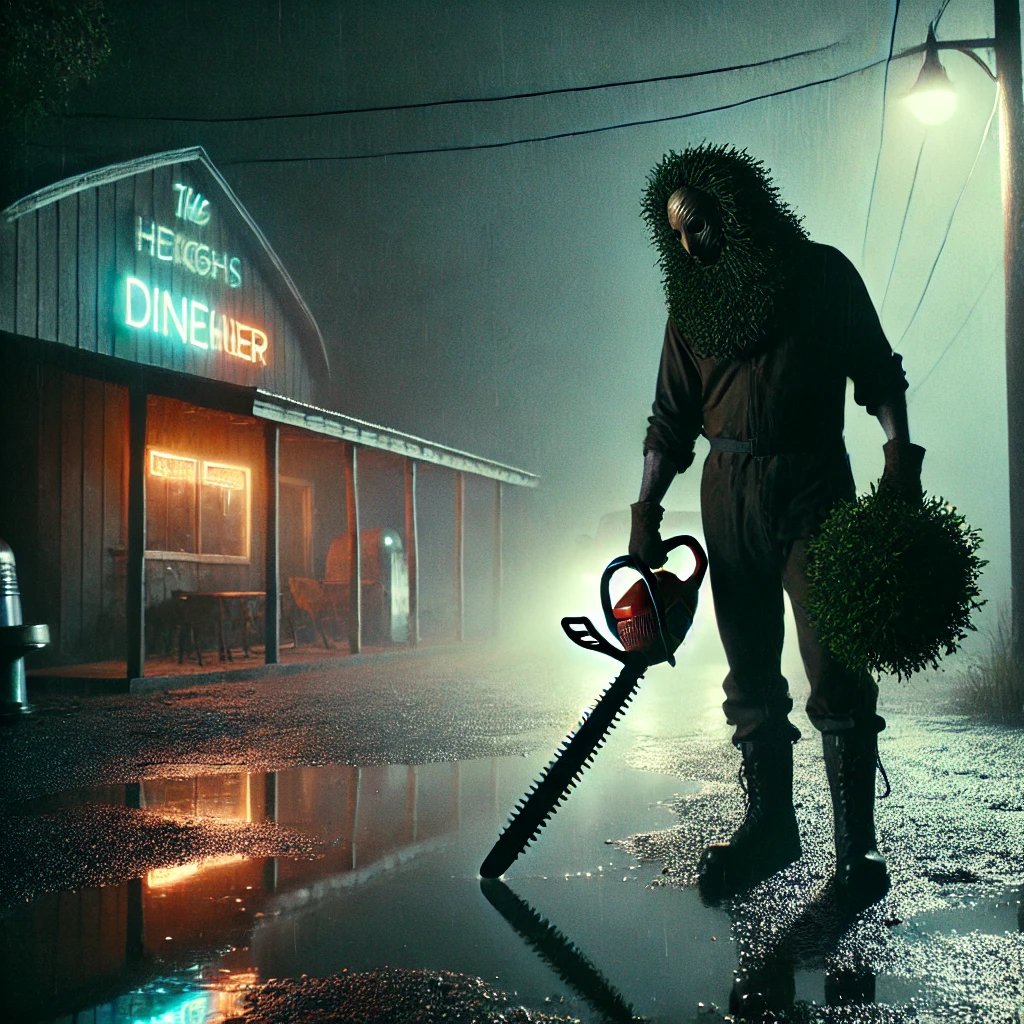
Cyberpunk represents the "urban liminality" of the early 90s—the "sonic equivalent of a cold, empty city at night" where the promise of technology felt both "euphoric" and "terrifying". It captures the feeling of a "transition from a cold winter to a slightly less cold spring," where the "writing's on the wall" for traditional stardom. Like the "abandoned quarry" on the cover of Slint’s Spiderland, the digital landscape of Idol’s Cyberpunk is a "non-place" where the boundaries between the real and the synthetic are blurred.
Music Memory and the Mechanics of Forgetting
The reason these three albums—by Sumén, Squier, and Idol—are considered "forgotten" rock is rooted in the "neural basis of the mere exposure effect" and the "cultural turn" of the early 1990s. Music appreciation relies strongly on "memory processes," and when a musical "scene" undergoes a radical shift, the collective memory of the preceding era is often suppressed in favor of a "new narrative".
The Neural Basis of Transition
Research indicates that "previous exposure" leads to "liking," but this effect is vulnerable to "cognitive dissonance" when a new "modal logic" is introduced. In the early 90s, the "grunge" modal logic was so powerful that it created a "memory gap" for artists like Billy Squier or Billy Idol who were attempting to transition. The "limbic and paralimbic areas" of the brain that govern musical emotion were effectively "reprogrammed" by the cultural shift of 1991, leaving these albums as "audible invisibility".
Cultural Memory and the Digital Ecology
In the modern age, AI and digital archives are redefining how we interact with "forgotten" music. These albums are now being "retrieved" from the margins, repositioned as "co-authors in the evolving ecology of musical memory". The "virtual" archives of Reddit and YouTube allow for the "reflexive organization and articulation of memories" that were previously lost. The "liminal space" of the early 90s is being rediscovered by a new generation that views these "failures" as "magical" artifacts of a past they never experienced.
| Mechanism | Description | Impact on Early 90s Rock |
|---|---|---|
| Mere Exposure Effect | Liking increases with exposure. | Abandoned when "new" sounds (grunge) dominated the airwaves. |
| Cultural Memory | Generational identities shaped by "scenes". | Erased the "transitional" artists who didn't fit the 1991 narrative. |
| Fictional Acoustic Space | Using the studio to create a non-live environment. | Allowed Idol and Sumén to experiment with textures that felt "liminal." |
| Narrative of Loss | The belief that a "revolution" (rock) has floundered. | Defined the late-career output of Billy Squier and the legacy of arena rock. |
Second and Third-Order Insights: The Causal Relationships of Early 90s Decay
The "forgotten" status of these albums is not accidental; it is the result of a specific "causal relationship" between technology, economics, and psychological "numbness".
* The Technological Paradox: The very technology that Billy Idol used to sound "futuristic" (Macintosh computers) made his music sound "dated" almost immediately, whereas the "bare, naked" production of Slint’s Spiderland (recorded on analog tape) became "timeless". This is the "liminal paradox": the more a work tries to occupy the future, the faster it becomes a relic of the past.
* The Displacement of the "Guitar God": Billy Squier’s decline was not due to a lack of talent but a "shift in source domains". The "identification with the other" that rock music provides shifted from the "spectacle" (Squier/Idol) to the "authentic struggle" (Sumén/Cobain). This created a "liminal emotional state" where the old icons were no longer "soothing or comfortable".
* The Rise of the "Invisible" Artist: Jimi Sumén’s obscurity allowed his work to survive as a "speculative space". Because he was never a "household name" in the West, his music was not "erased" by the narrative of loss in the same way Squier’s was. This highlights a "third-order insight": in the digital age, obscurity is often a more effective "preservative" of musical memory than fame.
Conclusion: Navigating the Acoustic Deadness
The "forgotten rock" of the early 1990s represents a "liminal zone" that is essential for understanding the trajectory of modern sound. Jimi Sumén’s Paintbrush, Rock Penstemon, Billy Squier’s Creatures of Habit, and Billy Idol’s Cyberpunk are not just failures; they are "sound dramas" that reflect the "loneliness and uncertainty of early adulthood" in a rapidly changing world.
These albums occupy the "fictional acoustic spaces" of a town "during a transition from a cold winter to spring". They are the "white ships sailing in a sea of blackness," providing a "cadence and cover" for those who feel "uneasy and paranoid" in the face of the technological future. By listening to these "forgotten" artifacts, we are not just engaging in nostalgia; we are "working through the squelch" to find a "speculative space" where the past and present remain "aesthetically linked".
The liminal spaces of the early 90s—whether they be the "empty rooms" of Sumén’s art rock or the "wasteland" of Idol’s digital dystopia—remind us that "most music is already lost," but what remains can still "move us emotionally" if we are willing to "enter the music and slip into another world". These three albums are the "passports" to that world, documenting the moment when the "old gods" died and the "new ghosts" were born.
Comments
Post a Comment