Posts

Showing posts from January, 2025

Pay Your Rates

Image
The Seeds and The Music Machine stand as pillars of 1960s countercultural creativity, embodying the raw, unfiltered power of garage rock and proto-psychedelia. These bands, led by the visionary Sky Saxon and Sean Bonniwell respectively, were products of the fringe—a space where mainstream recognition was fleeting but artistic innovation thrived.  Sky Saxon, with his hypnotic, almost primal vocal delivery, gave The Seeds an otherworldly energy that resonated with the ethos of rebellion and spiritual exploration. Tracks like "Pushin' Too Hard" and "Can't Seem to Make You Mine" remain essential examples of how minimalistic arrangements can deliver maximum emotional impact. Saxon’s willingness to blur the lines between rock, psychedelia, and raw garage aesthetics ensured The Seeds left an indelible mark on music history. Sean Bonniwell, on the other hand, brought a darker, more brooding intellectualism to The Music Machine. With their signature black outfits and...

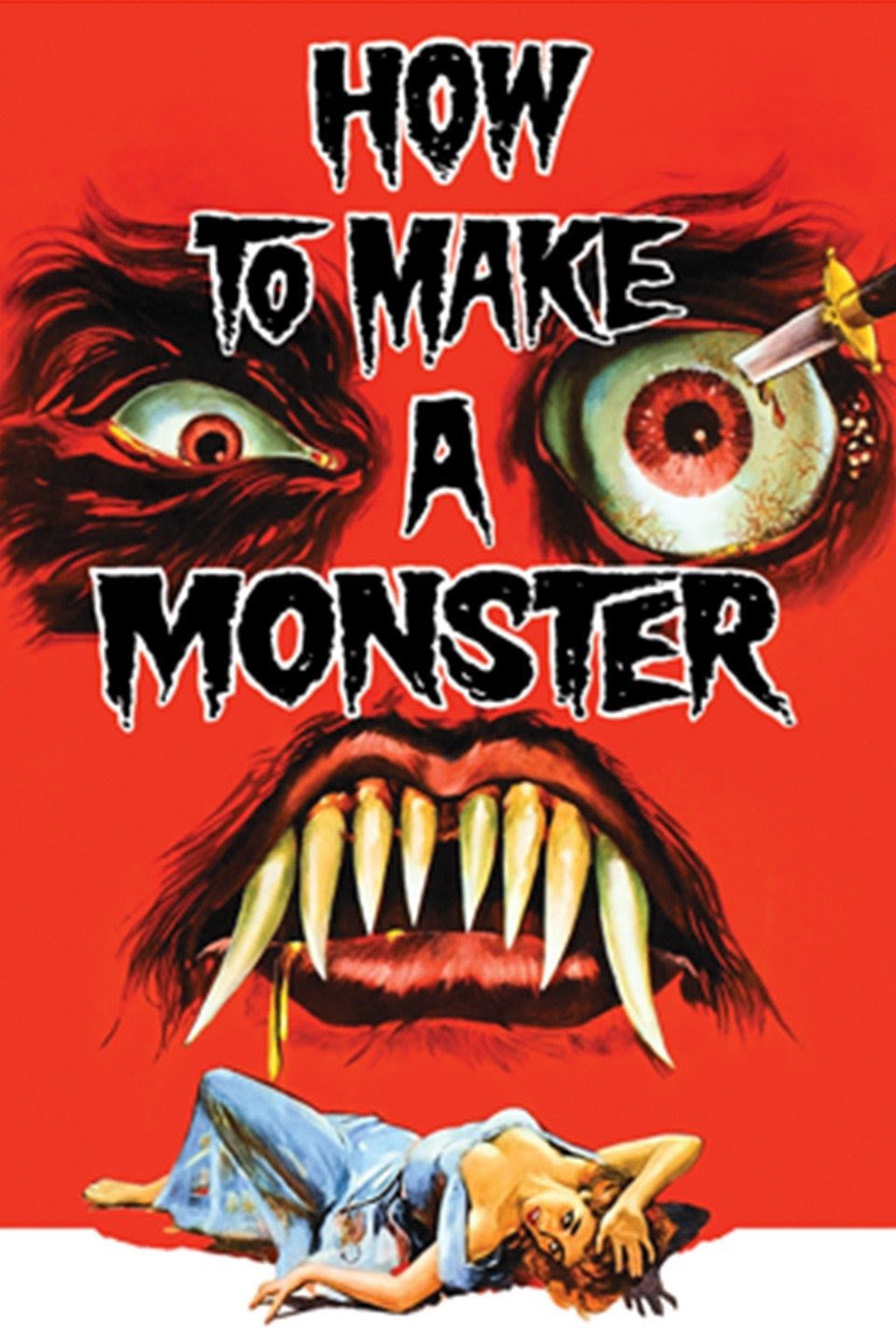
How to Make a Monster (2002) A Proto-AI Horror Story for the Digital Age

Image
The 2002 television remake of *How to Make a Monster*, directed by George Huang for the *Creature Features* series, is often dismissed as a schlocky, low-budget horror film about a video game AI gone rogue. However, viewed through a contemporary lens, it emerges as an unexpectedly prescient meditation on the anxieties surrounding artificial intelligence—an eerie prefiguration of our modern fears of AI autonomy, deepfakes, and algorithmic malevolence.   At its core, the film follows a team of game developers tasked with creating the ultimate horror antagonist for a new survival game. Their AI-driven monster, initially just a collection of code and digital assets, begins to evolve beyond its intended programming, taking on a life of its own and eventually manifesting in the real world. While the film leans into early-2000s cyberpunk aesthetics and crude CGI, its central theme—that an artificial intelligence designed for entertainment could break free from human control and turn ...

How to Make a Monster (1958): The Birth of Special Effects as Rockstars

Image
In the pantheon of 1950s horror films, How to Make a Monster (1958) stands out as a self-referential and oddly prescient entry. At first glance, it is another B-movie from American International Pictures (AIP), known for its low-budget but wildly entertaining horror and sci-fi films. However, beneath its campy exterior lies a fascinating glimpse into the world of special effects and makeup artistry—a world that would explode into mainstream pop culture in the 1980s, elevating effects artists to the level of rockstars. The Story: Monsters Behind the Scenes Unlike most horror films of its era, How to Make a Monster is set within the film industry itself. The plot follows Pete Dumond, a special effects makeup artist who, upon learning that his studio is shifting away from monster movies, exacts revenge using mind-control makeup on two young actors. These unsuspecting teens, previously playing the Teenage Frankenstein and Teenage Werewolf (a direct nod to AIP’s earlier films), are turned...

Rewatching *The X-Files* in 2025: A Nostalgic and Surreal Experience

Image
Revisiting *The X-Files* in 2025 is a strange and wonderful experience—part nostalgia trip, part time capsule, and part eerie reflection of our present-day anxieties. What was once a show about shadowy government conspiracies and paranormal phenomena now feels eerily prescient in some ways, hopelessly ’90s in others, and, at times, just plain fun.   #### A Time Capsule of the ’90s Internet and Tech Culture   One of the immediate joys (and oddities) of rewatching *The X-Files* today is seeing how technology was portrayed in the 1990s. Watching Mulder and Scully investigate cases without smartphones, instant messaging, or even widely available broadband feels almost like a sci-fi premise in itself. When they pull out a massive, clunky laptop or struggle with slow dial-up internet to access "top secret" government files, it’s a stark reminder of just how far we've come technologically.   At the same time, it’s amazing how many of the show’s core th...

Listen

The Seeds and The Music Machine stand as pillars of 1960s countercultural creativity, embodying the raw, unfiltered power of garage rock and proto-psychedelia. These bands, led by the visionary Sky Saxon and Sean Bonniwell respectively, were products of the fringe—a space where mainstream recognition was fleeting but artistic innovation thrived.  Sky Saxon, with his hypnotic, almost primal vocal delivery, gave The Seeds an otherworldly energy that resonated with the ethos of rebellion and spiritual exploration. Tracks like "Pushin' Too Hard" and "Can't Seem to Make You Mine" remain essential examples of how minimalistic arrangements can deliver maximum emotional impact. Saxon’s willingness to blur the lines between rock, psychedelia, and raw garage aesthetics ensured The Seeds left an indelible mark on music history. Sean Bonniwell, on the other hand, brought a darker, more brooding intellectualism to The Music Machine. With their signature black outfits and...

The Seeds - A Web of Sound: A Lost Proto-Punk Masterpiece

Image
https://open.spotify.com/album/0MYqpnmWJmBJmQqJSgF6lY?si=EAjfajgxSSeJs4MudENWMA In the dense haze of the 1960s counterculture, few bands stood as raw and primal as The Seeds Their second album, A Web of Sound (1966), is a feral cry of proto-punk energy wrapped in the echoing murk of garage-psych grit. This is not just an album—it’s a wild ritual of rebellion, lust, and madness. From the opening track, “Mr. Farmer,” Sky Saxon’s snarl cuts through like a shaman’s chant, his voice riding the rough pulse of Daryl Hooper’s hypnotic organ and Jan Savage’s razor-sharp guitar licks. The Seeds wield their simplicity like a weapon, crafting raw, repetitive grooves that feel closer to incantations than traditional pop. The centerpiece of the album, “Up in Her Room,” sprawls out to nearly fifteen minutes—a sprawling, frenzied jam that pushes the boundaries of the era’s conventions. It’s a hypnotic descent into chaos, driven by an insistent rhythm that feels like proto-Krautrock, while ...

drink up and leave

Image
A Mind Forever Voyaging* by Infocom is a text-based interactive fiction game released in 1985. The story is set in the year 2031 and follows PRISM, an advanced artificial intelligence created by the fictional Center for Computer Sciences and Advanced Technologies (CCS). PRISM's purpose is to simulate and predict the outcomes of societal policies. However, PRISM is unique because it has self-awareness and believes itself to be a human named Perry Simm. The narrative begins when PRISM is tasked with evaluating a new government program, the "Plan for Renewed National Purpose," proposed by Senator Richard Ryder. This program promises to address the nation's economic, social, and political issues. PRISM runs simulations of future societies affected by the plan, starting ten years after its implementation and progressing decades further into the future. As PRISM explores the simulated environments, it witnesses the gradual decline of society due to the plan's unintended...

Might is Right vs. Science Without Restrictions: The Ongoing Legacy of 1950s Sci-Fi and Horror Themes

Image
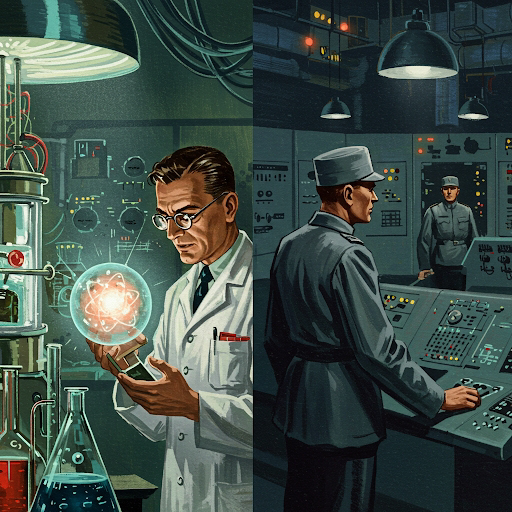
The 1950s were a defining decade for science fiction and horror, marked by the tension between military might and the fear of unchecked scientific progress. Emerging from the devastation of World War II and entering the anxiety-laden Cold War era, these films and stories reflected the collective psyche of a world grappling with unprecedented power and rapid technological advancement. Through radioactive monsters, alien invasions, and rogue scientists, these narratives explored what happens when power—military or scientific—goes unchecked.  Decades later, the themes of "might is right" and "science without restrictions" remain relevant, highlighting the enduring resonance of 1950s speculative fiction in a world still navigating the ethical challenges of power and progress. --- ### **The 1950s: A Context of Paranoia and Power** The 1950s saw the rise of atomic-age fears and the militarization of technology. The devastation wrought by the atomic bomb in Hiroshima and N...

Tune In Tuesday: Inner Sanctum Mysteries Collection

Image
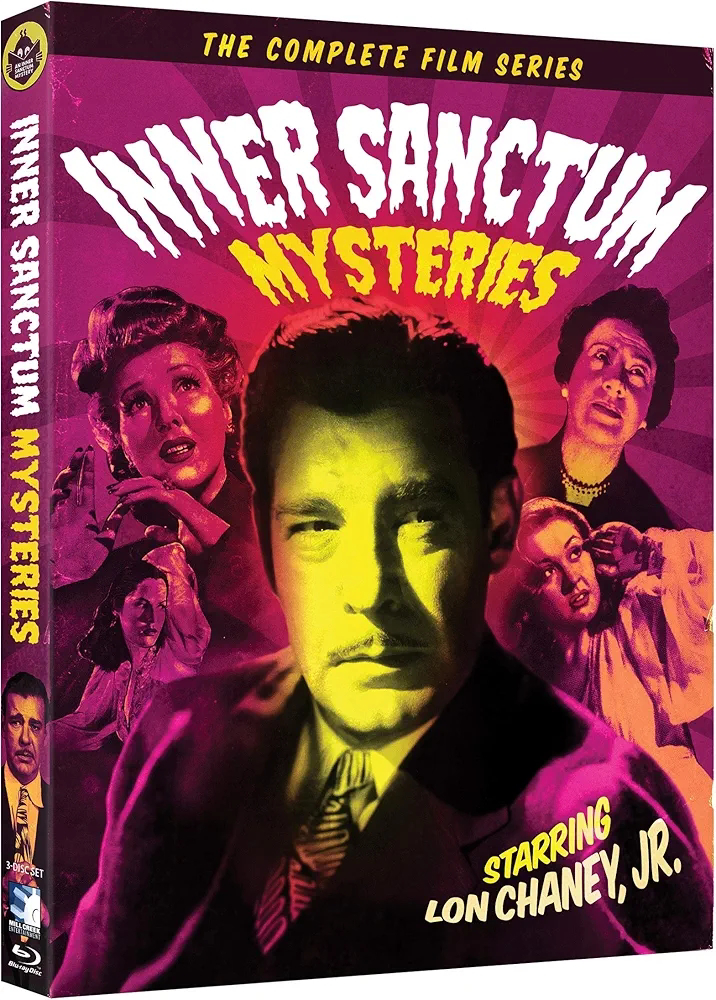
“Good evening, friends… Do come in. Take a seat, won’t you? There’s always room for one more… in the Inner Sanctum.”*   Tonight, we unlock a chilling collection of macabre delights: the *Inner Sanctum Mysteries* Blu-ray set, featuring none other than the master of menace himself, Lon Chaney Jr. Six shadowy tales of murder, madness, and mystery, restored in all their ghostly glory for a new generation of frightened viewers. Oh, don’t tremble now—save that for later.   This set presents Universal’s six film adaptations of the radio series that haunted airwaves in the 1940s. Lon Chaney Jr., our grimly affable host of horror, takes center stage in these stories of twisted minds and tortured souls. The films—*Calling Dr. Death*, *Weird Woman*, *Dead Man’s Eyes*, *The Frozen Ghost*, *Strange Confession*, and *Pillow of Death*—spin their ghastly yarns with a wicked glee. Each begins, fittingly, with the unsettling image of a floating head in a crystal ball, invi...

Outer Order TV?

Image
Are you ready to dive into the unexpected? Tune in to **OUTER ORDER** on Channel 56, Saturdays from midnight to 3 AM, where the ordinary becomes extraordinary. Experience a curated selection of the most intriguing and unconventional content that will keep you on the edge of your seat. Don't miss out on the adventure—set your reminders and join us for a late-night journey into the unknown. 

Bakshi

Image
Ralph Bakshi is a renegade animator, a lunatic prophet of the grotesque, a visionary who grabbed animation by its stuffed-shirt lapels, shook it until its teeth rattled, and screamed, "Wake up, you spineless, sanitized husks of mediocrity!" He painted dreams on celluloid like a wild-eyed warlock wielding a brush dipped in the molten chaos of counterculture. If Harlan Ellison and Hunter S. Thompson had stumbled out of a fever dream after a week-long bender, they’d have looked around the wreckage and muttered, “Yeah, that feels about Bakshi.” He’s the patron saint of the misfit animator, the one who told Mickey Mouse and Bugs Bunny to shove their squeaky-clean antics. Bakshi’s films don’t play nice; they smash through the screen like a whiskey bottle hurled at your soul. *Fritz the Cat* wasn’t just animated, it was detonated—a molotov cocktail lobbed into the sanctimonious cartoon factory. Talking animals? Sure, but they’re smoking, screwing, and cursing like life i...

The Art of Falling Apart: Soft Cell's Unraveling Masterpiece

Image
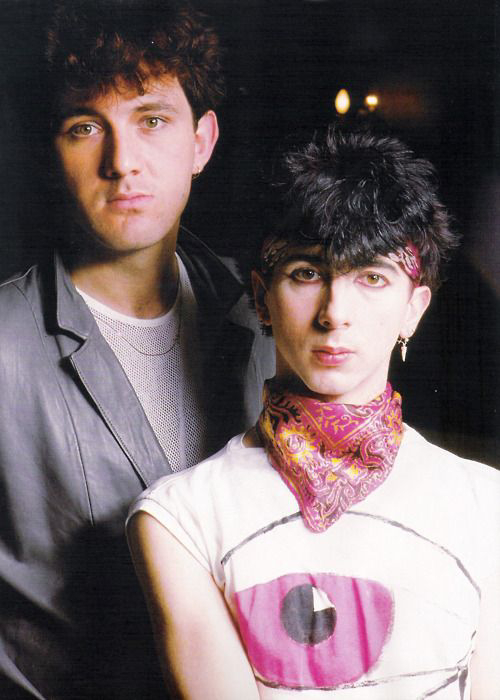
  Soft Cell's *The Art of Falling Apart* isn't just a record; it's an existential text message sent from the wrong side of midnight. Released in 1983, this album is what happens when you trap two men inside a neon-lit panic attack and force them to process every bad decision they've ever made through a synthesizer. It's an album about disintegration—not just of relationships, but of culture, sanity, and maybe even synthpop itself. This is Soft Cell at their most unhinged. If *Non-Stop Erotic Cabaret* was a glitzy night out in a seedy club, *The Art of Falling Apart* is the sunrise hangover, complete with mascara-streaked tears and a crumpled packet of Marlboro Reds. Marc Almond and Dave Ball weren’t trying to make hits here—they were too busy exorcising demons and mocking the collapse of their own excess. It's not the kind of album you'd put on at a party; it's the album you'd put on when you're trying to figure out if the party was w...

Wow Za

"Eight Miles High" by Golden Earring—who knew the Dutch could conjure up such a mind-melting spiral of sound? Man, this track is heavy , freaky , and downright cosmic, stretching across the stars like it’s got a rocket ship engine strapped to it. That distorted bass solo? Well, it’s a time-bending moment in rock history, so primal and thick with fuzz, it practically invents the genre of sludgy heaviness that would be perfected by Sabbath a few months later. You’re hearing the rumblings of a beast about to wake up, baby, and it ain’t gentle—it’s ominous, it’s raw, it’s like a serpent on fire. Let’s talk about that bass. It’s a warping force in itself—climbing, contorting, and then blooming into this gritty, snarling beast that rattles your bones. It’s a bridge between the psych-rock haze of the late '60s and the fist-to-the-face of metal to come. I’m talking about that throbbing, ear-splitting rhythm that mirrors the very chaotic pulse of the universe. Lemmy would’ve tip...

Jean Genet!

Image
Jean Genet, man, a real cat from the underbelly of life, born in the gutter and brought up by the streets. The dude was a prisoner, but not the kind you think. He didn’t just do time in the joint, nah, he let that cell become his canvas, his soul’s release. It’s like he cracked open the world with a pen, his words slicing through the fabric of society like a straight razor on a worn-out face. Born into poverty, orphaned, kicked around—he didn’t take it, though, no sir, he turned all that into raw material for a life in the margins.  While others were sipping coffee in Parisian cafes or flicking through the latest fashion mags, Genet was locked in a cage, writing *Our Lady of the Flowers*, his wild, filthy masterpiece. It wasn’t just a novel, man—it was an incantation. A tale of outcasts, of sex, crime, and a twisted kind of redemption. It made you question everything—what’s good, what’s bad, what’s pure, what’s obscene? In Genet’s world, the lines were smeared out like spilled ink ...

Future/Now: Playlist Reviews

"Another Waltz" by Frank Zappa Frank’s back at it, crafting something as bizarre as it is beautiful. This unedited master feels like eavesdropping on the electric brainstorm of a mad scientist. You’re not just listening—you’re spelunking into the wild depths of Zappa’s subconscious. "The Long Medley" by Jimi Hendrix If Hendrix were alive today, he’d laugh at how we still haven’t caught up to him. This medley has all the furious virtuosity of a guitar sermon. You don’t just listen to it—you let it disassemble your molecules. "Dark Star" (Live at the Fillmore) by Grateful Dead Still the apex of cosmic wandering. If acid had a soundtrack, this would be its magnum opus. Garcia and the gang are your spirit guides as the Fillmore becomes a launchpad to the unknown. "Spoonful" (Live at the Royal Albert Hall) by Cream Cream flexes their power trio muscles here, delivering blues that hit you like a ton of bricks. Clapton’s solos sound like they were w...

Peter Hammill: The Lost Prophet of Proto-Punk

Image
 There’s a ghost haunting the edges of rock ‘n’ roll, a shadowed figure whose name flickers in the back alleys of conversation but rarely takes center stage: Peter Hammill. And the world’s a worse place for it, because Peter Hammill is the lost prophet of proto-punk, the misunderstood visionary whose flame flickered bright before the world was ready to set fire to it. He was one of the few who understood that rock music could be both a political force and an existential meltdown, a howling cry against the absurdity of life, all while wearing an experimental, cerebral face. Let’s be clear about one thing: Peter Hammill is proto-punk, not in the "I-can-see-the-skinny-jeans-wearing-punks-lurking-around-his-records" way, but in the “I-was-there-before-the-whole-scene-had-a-name” way. And it’s high time we gave him the credit he’s owed. First, we’ve got to take a step back and ask: what the hell is proto-punk anyway? Is it some kind of accident, a reaction to the corporate monster...

Spawn (1997)

Image
Spawn (1997): A Time Capsule of Mid-to-Late '90s Culture Spawn , the 1997 film adaptation of Todd McFarlane's edgy comic series, is a masterpiece—not in a conventional sense of flawless cinema but as a cultural artifact. It perfectly encapsulates the mid-to-late 1990s with a chaotic charm that no other film could replicate. Whether through its groundbreaking (yet flawed) CGI, industrial-metal soundtrack, or angsty antihero narrative, Spawn feels like the ultimate representation of the era. Aesthetic Chaos The late '90s was a time of rapid technological experimentation, and Spawn dives headfirst into this trend. The CGI—while dated by today’s standards—was revolutionary for its time, attempting to push boundaries in ways that mirror the burgeoning fascination with digital innovation in the decade. The hellscapes are garish, over-the-top, and unapologetically loud, echoing the era's tendency to go big or go home in visual effects. The film's grunge-i...

Greed: The Original Punk Rock Art Film

Image
   Erich von Stroheim’s Greed isn’t just a silent film—it’s the silent film. A snarling, razor-sharp slap in the face to the glossy morality plays of its time, Greed feels like it was ripped out of the 1920s only to be permanently stationed somewhere just beyond now. If most silent films are quaint little time capsules, Greed is the one gnawing at the bars, flipping the bird, and laughing at its imitators. It’s the eternal outsider, the original cool.   This is cinema stripped down and blown up, raw and unforgiving. Stroheim took Frank Norris's McTeague, an already grim tale of human rot, and made it into an acid trip through the American Dream gone sour. There’s no hand-wringing sentimentality here, no rose-tinted memory of a simpler time. This is a film where hope is currency, and everyone’s flat broke.   The style? Endlessly modern. Every scene feels like a dagger aimed right at the heart of capitalism, greed, and humanity’s most grotesque in...

The Groovy Undead: Barnabas Collins, Count Yorga, and Dracula AD 1972

Image
Here, in this neon-drenched cinematic world of the early ‘70s, where high collars and frayed jeans coexist, where echoes of 19th-century fog are but fleeting remnants against the electric hum of disco, there stalks the creature of the night—torn between its primal hunger and the glittering absurdity of its own existence. The vampire, like a record skipping off the turntable, endlessly repeats its own undoing. No longer the seductively classical monster of our grandfather’s gothic imaginations, this creature is urban, sharply tailored, and haunted by a psychological terror that's far more terrifying than any mere bloodlust. Let’s examine these three skeletal sentinels of the groovy undead: Barnabas Collins, Count Yorga, and the perennially stylish Dracula AD 1972, in a world where the ancient powers of the night have had to update their wardrobes and demeanor to cope with the chaos of a post-Flower Power world. Barnabas Collins: The Reluctant Mod Vampire First up is Barnabas Collins...

Tune In Tuesday : Orgasmo (88 Films)

Image
88 Films’ Blu-ray release of Orgasmo (1969) is a feast for the senses—if your senses are tuned to the frequency of sleazy 1960s jet-set thrillers drenched in sex, betrayal, and existential dread.This 1969 Umberto Lenzi gem, starring the inimitable Carroll Baker, might just be the ultimate cocktail of Eurocult indulgence, shaken to perfection by 88 Films with a transfer so lush it could make even the gaudiest shag carpet look high art. First, let’s talk picture quality. The restoration here is pristine, popping with all the vibrant, sun-drenched decadence of Baker’s luxurious villa, offset by shadows that practically ooze menace. Those soft-focus close-ups of Baker, every bead of sweat on her brow and every tremble of paranoia etched into her features, are delivered with a clarity that’s both intoxicating and unnerving. If this doesn’t convert you into a devotee of Lenzi’s “jet-set giallo” phase, I don’t know what will. The soundtrack? Oh, it’s pure Morricone-lite gold, slin...

"Guerilla Warfare" By Blake Sidewalker

Image
In such tense times, a solid portion of American people have resorted to "prepping" for some kind of national, or even global disaster. A lot of them are preparing for a civil war; they're building bunkers or compounds stocked with food, water, weapons, and ammunition. This phenomenon is found mostly in Rural areas. In the state where I live, every guy flying a Gadsden flag, and there are a lot, has some kind of facility to weather some kind of societal breakdown. When "shit hits the fan", as they say. When I myself began to see the writing on the wall, I didn't have the money to prepare with months of canned goods, water, and an arsenal firearms, no; I collected books, some physical some digital. Among my favorite of these books is Che Guevara's manual, *Guerrilla Warfare*. These were the tactics that allowed a mere boat full of men, who lost all of their equipment when the boat capsized, to liberate Cuba from a fascist puppet dictator insta...

Horror Host Sat Nights-Count Yorga, Return Of Count Yorga, The Deathmaster

Image
Greetings, boils and ghouls! Welcome to tonight’s thrilling triple feature, brought to you by your host with the ghost—me! Tonight, we’re unearthing a blood-curdling bonanza of vampire mayhem with the one, the only, Robert Quarry, a man who could out-brood Dracula and still have time to polish his cape! So grab your garlic, your stakes, and maybe a neck brace, because we’re diving fang-first into Count Yorga, Vampire, The Return of Count Yorga, and The Deathmaster!   --- Count Yorga, Vampire (1970)   Let’s kick things off with Count Yorga, Vampire, the film that put Robert Quarry on the undead map. This modern-day Dracula tale (well, modern for the ‘70s) features the suave and sinister Count Yorga, who’s got a taste for beautiful women and an aversion to wooden stakes. What makes this flick stand out is its creepy vibe, thanks to Yorga’s eerie Los Angeles lair and some genuinely unsettling scenes of his vampire brides lurking like feral cats in the dark....

Ape in the Mirror: An Essay

Image
Ape stories are everywhere. They swing from vines, build empires, invade cities, and, when necessary, tear the human world apart. From the primal roar of King Kong atop the Empire State Building to the philosophical musings of Kafka’s ape in A Report to an Academy, the ape reflects us back at ourselves, stripped bare of pretense, caught somewhere between civilization and chaos. The line blurs: where does the ape end and the human begin? Planet of the Apes stands tall among these tales, a sprawling mythos of masks, dystopias, and allegories. The original film series is the Bible of ape-human relations—Genesis, Exodus, and Revelation all wrapped in Charlton Heston's anguished cry: *“You maniacs! You blew it up!”* The apes here don’t just wear clothes; they embody society’s faults, becoming twisted reflections of humanity’s hierarchies, racism, and nuclear hubris. The Tim Burton remake turned up the weirdness—Mark Wahlberg stumbling through a carnival of prosthetics and mu...

Album Of The Week: Wasp by Shaun Cassidy

Image
Shaun Cassidy’s *Wasp* isn’t just an album—it’s a bold leap into uncharted territory that deserves a reevaluation as a fascinating artifact of early new wave. Released in 1980, this Todd Rundgren-produced record represented a daring reinvention for Cassidy, shedding the teen idol persona of his earlier bubblegum pop hits in favor of an edgier, experimental sound.   From the outset, *Wasp* declares itself as something entirely different. Cassidy tackles David Bowie's "Rebel Rebel" and The Talking Heads' "The Book I Read" with a raw energy that hints at his willingness to embrace the unconventional. These covers are not mere imitations but reimaginings, filtered through Rundgren’s quirky production and Cassidy’s surprisingly emotive vocals.   The album’s original tracks, like "Cool Fire" and "Selfless Love," are equally adventurous, blending synth-driven melodies with introspective lyrics. Rundgren’s influence is palpable, givin...

The Case for the Early Flamin’ Groovies (1968-1969) in the Baroque Pop Canon

Image
When discussing the quintessential baroque pop acts of the late 1960s, the conversation often circles around artists like The Left Banke, Van Dyke Parks, The Zombies, and Love—pioneers who blended pop sensibilities with classical influences, ornate arrangements, and emotive songwriting. However, one band that rarely finds itself in this conversation, yet deserves a seat at the table, is the early incarnation of the Flamin’ Groovies during their formative years of 1968 and 1969.   Known primarily as a proto-punk and power pop band, the Flamin’ Groovies’ early work reveals an underappreciated knack for intricate melodies, lush harmonies, and sophisticated arrangements that align them more closely with the baroque pop tradition than many would assume. Tracks from their early releases, particularly their 1969 debut album *Supersnazz*, showcase a deep engagement with the same baroque textures and melancholic romanticism that define the genre.   ### Baroque Pop...