Down the Tubis: The Original Outer Limits

Watching the original The Outer Limits on a streaming service like Tubi can feel less like choosing a show and more like intercepting a broadcast from another era. There is no polished re-mastering or prestige rebadge – just 1960s television in its raw, moody, sometimes ragged glory. In this context one thing becomes clear: Season One of The Outer Limits (1963–64) was not merely “good TV,” it was television briefly mutating into cinema, philosophy, and nightmare all at once. Season One raised ambitions to new heights, daring to apply film‑style artistry and Cold War paranoia to the small screen years before TV “grew up.” Only by appreciating how radical Season One was can we understand why Season Two’s apparent tamer tone turns out to be a strange, paradoxical superpower in its own right.
Season One (1963–64): Television Breaks Containment
To say the first season of The Outer Limits was ahead of its time is an understatement – it really didn’t belong to its time at all. In 1963, most American network programs were visually flat, dialogue‑driven, and morally reassuring. Sitcoms and dramas were staged almost like filmed theater, aiming for comfort and clarity rather than edge or ambiguity. By contrast, The Outer Limits burst into living rooms like an electrical fault in the signal. Its aesthetics and themes were unlike anything else on TV. Critics and historians note that the series consciously treated television as a cinematic medium. In the words of one retrospective, the producers aimed to make the show “cinematic, shot on 35mm” and viewed like a film – effectively pushing television to its “creative outer limits”. No less an authority than cinematographer Conrad Hall (who shot several episodes) embraced a stark, shadow‑heavy style that would have been at home in a film noir or German Expressionist movie. This was nothing like the square, brightly lit sets of contemporary TV. As one commentator puts it, Outer Limits episodes frequently used “deeply‑shadowed, high‑contrast” black‑and‑white imagery to keep the viewer off‑balance. The goal was to unsettle – not to reassure.
Season One deployed techniques that felt almost illegal for 1963 television. Consider just a few of them:
Aggressive close-ups: The camera often lunges in on actors’ faces, trapping them in moments of existential panic or dread. Ordinary people on TV don’t usually get this up‑close.
Expressionist lighting: Scenes are lit like gothic horror or film noir. Harsh directional lights and heavy chiaroscuro (light vs. shadow) dominate the frame. Half the scene might be swallowed by darkness.
Deep shadows: Corners of the set may vanish entirely into black. This use of shadow (a hallmark of Conrad Hall’s cinematography) both hid cheap effects and kept viewers guessing what might lurk there.
Low camera angles: Authority figures or monsters are often shot from below so that they loom and deform. Censors wouldn’t have approved if the viewpoint were too obvious – instead, Outer Limits opted for barely stable framing.
This wasn’t mere “TV spooky.” It was cinematic dread. No other network drama in 1963 looked or felt like this. In fact, episodes frequently feel less like teleplays and more like lost B‑movies, experimental theater, or philosophical radio dramas given flesh. The creative team knew they were pushing boundaries. Film scholar Tony Williams writes that Outer Limits was “disallowed” from being run‑of‑the‑mill television: the producers “aimed at making the series cinematic”. Over 35mm film, Outer Limits achieved a texture and scale far beyond most shows of the era.
The sense of design extends to the monsters – known in Outer Limits slang as “bears.” Each Season One story typically had a creature at its heart. But these alien beasts were anything but campy. They were asymmetrical, clumsy, grotesque, and thoroughly uncomfortable to look at. As one critic notes, the creatures look “pronouncedly fake by contemporary standards” – often men in rubber or battery‑powered models – and they are all the scarier for it. In “The Invisibles,” for example, the alien invaders (parasites on politicians) are hideous, plastic horse‑shoe crabs with toupee‑wig backs. Their jerky movements and unnatural noises create a disquieting disjunction between what you see and what you imagine – exactly the point. It’s telling that the series insisted on a monster or creature in every episode as a focal point, yet the result wasn’t “cute” or “cool” special effects but pure nightmare fuel. Outer Limits monsters weren’t meant to charm the audience – they were meant to discomfort and haunt.
Duane Vore, writing retrospectively in 2013, captured how Season One’s stories themselves were years ahead of their time. He notes that Outer Limits tackled “21st-century challenges” (genetic engineering, nuclear war, evolution, etc.) long before those ideas were common in media. Even then, these futuristic sci-fi premises were always about human fears and ethics. Take, for instance, the classic episode “Nightmare” (S1E10), which centers on soldiers from opposing planets who are psychologically tormented by gargoyle‑like aliens. The script rips off the mask to reveal that the scenario is really about institutional torture and groupthink in a war context. Or consider “The Architects of Fear,” in which a scientist is willingly transformed into a giant insectoid alien to unite Earth by fear. These plots are absurd on the surface, yet they function as allegories for 1960s anxieties: Cold War mistrust, the hubris of “progress,” and the moral cost of survival.
Common themes (or obsessions) emerge across Season One:
The moral collapse of science: Science and technology are not ennobling. In many episodes, tech advances empower arrogance or cruelty rather than enlightenment. A scientist who sacrifices his humanity for supposed “progress” (as in “The Architects of Fear”) unwittingly hints that scientific neutrality is easily corrupted.
Militaristic logic vs. humanity: Several stories (e.g. “The Majority of One,” though that’s a Twilight Zone story; but within Outer Limits, episodes like “The Inheritors”) show military minds making cold, brutal decisions for the sake of protocol or fear. The show conveys that even supposed heroes (generals, soldiers, government agents) can override compassion.
Identity as imposed, not chosen: Episodes such as “The Man Who Was Never Born” and “The Chameleon” probe themes of identity theft and soul loss. Characters often discover that their very identity has been manipulated or overwritten by outside forces.
Survival justifying atrocity: In the Outer Limits universe, the cry of “we had to do it, for survival” is rendered hollow. Creatures in “The Invisibles” and people in “O.B.I.T.” (an uncanny surveillance story) show how systems use war or paranoia to commit atrocities under the guise of necessity.
What ties these threads together is Cold War anxiety stripped of patriotic varnish. No episode celebrates American exceptionalism; instead, human beings and their institutions are shown to be deeply fallible. In some classic lines of allegory, Outer Limits remarks that progress itself might be illusory or self-destructive. Critic Chuck Bowen observes that the show repeatedly suggests humans should “slow down and enjoy what they’ve already been given,” warning against unchecked ambition. Outer Limits was essentially asking: What if, in our fear of the future, we become monsters ourselves?
This terrifies because it implies there are no pure heroes. The scientists in these stories are often fallible or compromised; even the menacing aliens sometimes turn out to be innocent or wronged (as in “The Bellero Shield”). The “us versus them” boundaries blur: the real monsters are sometimes human. To 1963 broadcast standards, this was almost heretical. No wonder the producers had to dress it up in the wildest possible imagery to get it on air.
A Cinematic Language Smuggled into Living Rooms
In concrete terms, Season One’s cinematic edge can be seen in how it framed and lit every scene. Outer Limits deliberately employed cinematic techniques within the television format, giving the series a “noirish” look. In practice, this meant leaving behind the era’s usual multi‑camera, stagey presentation. Instead, episodes were shot by a single camera on film, with careful composition and editing. This approach allowed for fluid camerawork and edits that felt more like movies. Notably, Conrad Hall (later a Hollywood legend) and other veteran cinematographers frequently shot Outer Limits, bringing film-level expertise into TV. They used all the tricks of the darkroom: silhouettes, extreme close‑ups, tilted angles, and areas of inky blackness. Film scholar Richard Crudo remarks that this high‑contrast cinematography kept the viewer “off-balance and suspicious of what might happen next”.
For example, many Season One scenes put actors’ faces in near-full-frame with uncanny lighting. The lighting wasn’t there to flatter the performers, but to communicate dread: half their face might be lit by a single glaring lamp, while the other half disappears into shadow. This was a stark departure from the soft, even lighting of most TV. The effect is that even a simple dialogue suddenly feels intense, claustrophobic, and cinematic. In one episode a professor might be sitting at a desk, but in Outer Limits his face is lit from below so that his eyes cast deep shadows, and the viewer might feel he’s under interrogation.
The camera angles similarly break norms. Authority figures or aliens often appear from a low angle, making them loom and distort. Imagine a doctor or general seen from below, their face receding into darkness, like a screen villain from a German expressionist film. It makes every confrontation feel ominous. In contrast, when a character is shown from a very high angle, as if from the ceiling, it injects vertigo and vulnerability. Modern viewers might find these choices obvious in suspense, but in 1963 they were revolutionary on TV.
All these techniques were harnessed to turn Outer Limits into a kind of theatrical spectacle. Recurring visual motifs – swirling optical illusions, nightmarish sets, and stark monochrome – made the series feel like an art horror film for TV. Indeed, the opening credit sequence itself was designed to unsettle: the familiar broadcast scope lines and control voice were an alarm from the start (see below). In short, Season One was television smuggling in cinema.
Season One uses techniques illegal for early-’60s TV:
Aggressive close-ups capturing existential panic on faces.
Expressionist lighting straight from film noir or German movies, with stark contrasts.
Deep, black shadows often swallowing half the frame, leaving viewers guessing what lurks unseen.
Low camera angles making authority figures loom grotesquely.
This wasn’t just “TV spooky.” It was cinematic dread. Many episodes feel less like stage‑bound teleplays and more like lost B-movies, experimental theater, or philosophical radio dramas brought to life. The show’s physical look was equally radical. The producers, in fact, explicitly aimed to create “a cinematic televisual combination of art and entertainment” – a fair description of what we see on screen.
The monsters weren’t just cheap rubber suits. They were grotesque and asymmetrical. Writer Joseph Stefano famously required a monster in every episode, but the design philosophy was deliberately wrong – not glamorous or attractive. One critic describes how, in “The Invisibles,” the aliens look like “plastic horseshoe crabs” with wigs attached, and their jerky motions produce an uncanny sense of alien‑ness. These creatures are “pronouncedly fake” yet horrifying – a twisted candy that leaves a bad taste.
The sets and acting were also larger‑than‑life. Performances could be operatic, as if the actors knew they were in an epic nightmare. The writing often leans on overt allegory, with symbolic monsters and metaphorical plots. But as critic Richard Crudo notes, these shocks were “cloaked in philosophical, moral and behavioral themes”. In practice, every alien invasion, every future technology, was a surrogate for a human fear: identity loss, media control, the arms race, etc. Outer Limits was essentially forcing the audience to watch morality plays dressed as sci-fi horror.
All of these elements were a deliberate strategy. Season One knew it could not whisper its radical ideas, or the censors would rip it out. So it shouted them with spectacular visuals and monsters. As Crudo observes, even when cheap effects showed, the makers exploited that to heighten the spookiness. The ornate style and allegory weren’t indulgences but camouflage. In a sense, Outer Limits was embedding subversive content inside campy trappings. The network might have forbidden blunt anti-establishment messages, but it couldn’t ban imaginative scareplots. By the time viewers realized the show was critiquing military overreach or nuclear paranoia, they were halfway through being terrified by an alien bug. This was how radical ideas survived in a “hostile system”: you dress them up as spectacle, shout them at the audience, and hope no one noticed what you were really saying under the screams.
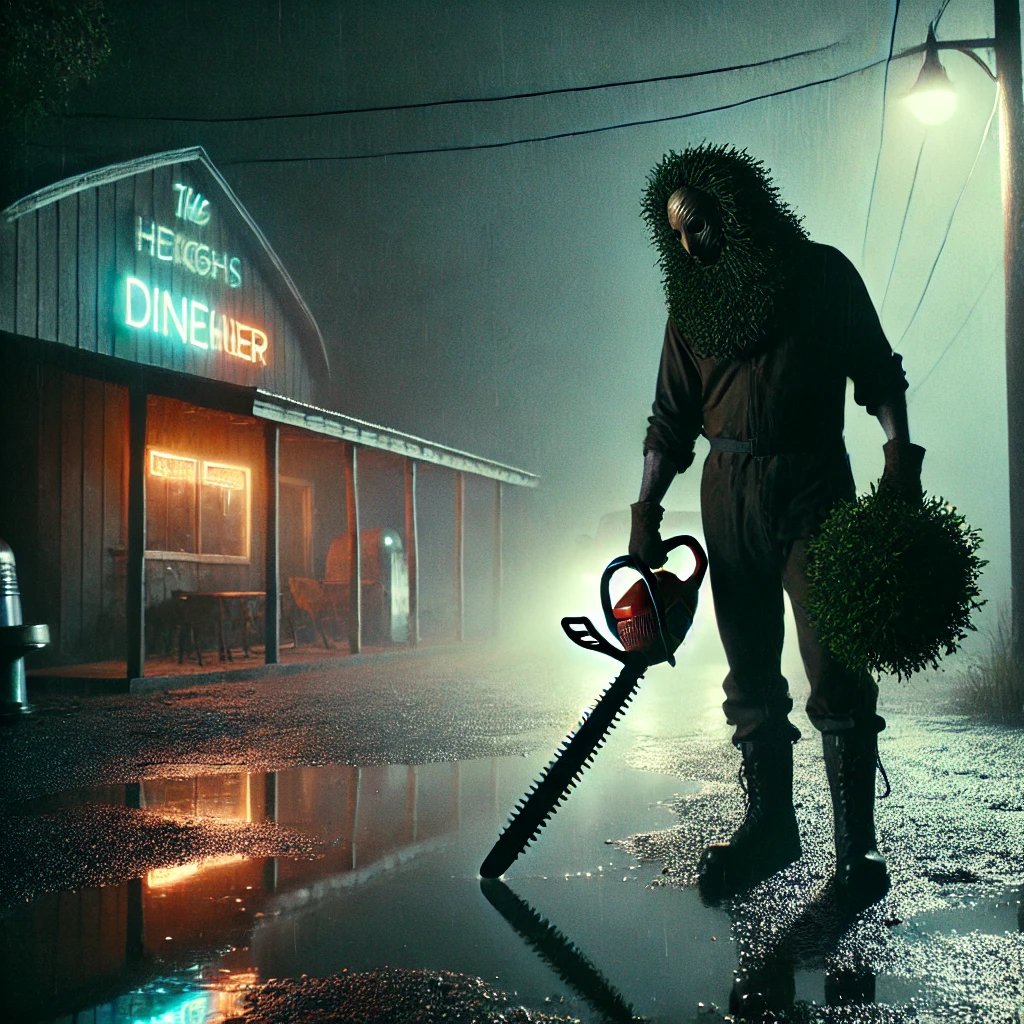
> Illustration – Cinematic Expression: Outer Limits often uses filmic techniques – dramatic closeups, low angles, stark lighting – more common in 1940s film noir or German expressionist cinema than 1963 TV. Season One’s visual style was distinctly “noirish,” with creative lighting design that treated each episode like a short film.
The Control Voice as Anti-Comfort
No discussion of Outer Limits is complete without its famous opening narration. Most anthology shows of the era had a soothing host or narrator to comfort viewers (“the great Rod Serling” or Roddy McDowall’s formal intros). Outer Limits turned that trope on its head. The series opens with the disembodied Control Voice saying, verbatim:
> “There is nothing wrong with your television set… We are controlling transmission… For the next hour, we will control all that you see and hear. You are about to participate in a great adventure… The Outer Limits.”
This monologue is pure Orwellian menace, not reassurance. It begins by insisting “nothing is wrong with your TV” – then immediately contradicts that by declaring that we (the show) are controlling your television. It is a cold, dehumanizing directive: sit still and watch what we show you. There is no “enjoy the show” promise; there is a warning that the viewer has no power or escape. For a 1963 audience, this was jarring. TV stations usually ended test pattern and color broadcasts by “standing by” or music; Outer Limits’ control voice is the opposite of passive.
In practice, the Control Voice functions as a declaration of war on complacency. Unlike The Twilight Zone – which often guided viewers into a story with a gentle moral preamble – Outer Limits starts with the viewer under threat. It tells us outright: you are not in control. The medium is not neutral. The show turns the television set itself into a potentially hostile object. The repeated refrain “There is nothing wrong with your television set… we are controlling transmission” breaks the fourth wall in a disquieting way. It primes us to expect not comfort, but cognitive dissonance.
Later in Season One, the Control Voice monologue was trimmed slightly (sooner on the clock, but still ominous). By the final Season One opening, it already sounds menacing: “There is nothing wrong with your television set. You are about to experience the awe and mystery…”. (In Season Two it was shortened further to an even more cryptic form.) Either way, Season One’s intro is meant to crackle in the mind. For viewers accustomed to polite announcers, hearing “we will control all that you see and hear” is a gut punch. It announces that Outer Limits will give them neither comfort nor predictability. This opening alone was revolutionary for TV, acting almost like a built‑in question: Do you really trust what you’re watching?
In short, the Control Voice refuses the viewer the usual “safe time” of network TV. It places Outer Limits alongside dystopian fiction (think Orwell or Bradbury) rather than family variety hours. And it is the first sign in every episode that you are not just watching a show – you are entering a mental experiment where your assumptions will be tested and possibly violated.
Ideas Too Big for the Box
Because Season One already shattered formal expectations, the writers could use it to pose big “what if” questions that mainstream TV of 1963 would never touch. Each episode’s gimmick (space probe, alien visit, scientific breakthrough) becomes a vehicle for exploring moral and philosophical dilemmas. The result is that science‑fiction concepts aren’t presented as neat plots – they are interrogated.
Season One Outer Limits often asks unsettling questions: “What if we become the monsters we fear?” or “What if the line between man and machine blurs?” In each case, the ideas are gigantic, even cosmic. For example:
Scientific Neutrality and Ethics: Episodes repeatedly suggest that science divorced from ethics can be catastrophic. A scientist’s hubristic experiment might unleash a threat to humanity – but Outer Limits then asks whose fault that is. In “The Sixth Finger,” a man evolves rapidly to a higher intelligence; the show doesn’t celebrate his brilliance, it mourns his loneliness. In “The Mutant,” Earth’s surface is toxic due to nuclear fallout; again, science didn’t save them. The series seems to suggest that progress alone isn’t inherently good – it must be guided by moral consideration.
Militarism vs. Humanity: There are many chilling scenes where military logic overrides empathy. In “The Inheritors,” for instance, army officers make cold decisions about an alien plague. And in “The Man Who Was Never Born,” the protagonist (played by Martin Landau) is initially held and shot at by soldiers without question. The show implies that even our protectors can become monsters of procedure. One episode in particular, “O.B.I.T.,” deals with an alien computer system that spies on everyone (in the future), yet what really terrifies us is how humans use that system to censor and control each other. These plots don’t respect military chains of command; they show them as easily corrupted by fear.
Identity and Self: Several Season One stories examine identity as something fragile or imposed. In “The Human Factor,” a brain scientist builds an android and discovers it has an identity crisis of its own. In “The Chameleon,” a man is replaced by an alien duplicate. The moral is often that who we are can be taken from us by larger forces. Outer Limits asks: if technology can rewrite you like a tape, what remains of the self?
Survival as Justification: When characters say “we did this to survive,” the show forces the audience to judge that reasoning. For example, the “hero” scientist in “The Architects of Fear” allows himself to be mutated into a grotesque creature to try to unite Earth by fear. He believes scaring people is worth the loss of his humanity. The Outer Limits doesn’t cheer this; it shows the horror and futility in believing that a grave atrocity is justified by saving face. The implication is bleak: in the Outer Limits universe, saying you did something “for the greater good” often reveals moral collapse.
All these ideas are essentially Cold War anxieties with the usual patriotism scrubbed off. Remember that Outer Limits was airing just after the Cuban Missile Crisis, with nuclear shadow hanging over everyone. The series doesn’t pump any flag; it just amplifies the dread. In one of his commentaries, writer Craig Barron points out that Outer Limits was “clearly inspired by The Manchurian Candidate,” steeped in espionage and paranoia. Many storylines feel like twisted political parables. For instance, in “The Architects of Fear,” the true invasion threat is revealed to be humanity itself. In “The Man Who Was Never Born,” the future’s dark, radioactive Earth is a warning. These are not happy endings; they are cautionary nightmares.
Importantly, Outer Limits refused to give easy answers. Unlike some TV of the time where good is always rewarded, Season One often leaves viewers on the hook. Heroes suffer, monsters show empathy, and systems hold their ground. This lack of tidy resolution was revolutionary on TV. It means these episodes hit you on a philosophical level, not just as disposable thrills. The result is a constellation of themes too big for a 60‑minute show: questions of human nature, free will, the price of knowledge. It is what made Season One feel so cinematic and profound.
Duane Vore aptly summarizes this retrospective view: “Years ahead of its time, [Outer Limits] explored, early on, such 21st-century challenges as human evolution, genetic engineering, nuclear war, and the energy crisis,” all while probing timeless human virtues and foibles. Season One Outer Limits truly did not behave like a typical 1960s TV show – it was interrogating the space beyond televised imagination.
Baroque Excess as Survival Strategy
Season One’s ornate style – the over-the-top sets, the grand speeches, the unabashed symbolism – was not just for show. In fact, many reviewers and even participants note that it was precisely because the show was so daring that it felt necessary to shout its message in spectacle. As Richard Crudo points out, Outer Limits “never forgot that stories are never really about [the sci-fi elements]; they are about people”. But to discuss human failings and cosmic ethics on mainstream TV, the creators had to hide in plain sight. They hid their ideas in robot monsters and space sagas. They hid them in operatic dialogue and theatrical acting.
In practice, this meant Season One is often melodramatic by design. Villains spout grand philosophies as they die; mothers weep in beautiful worlds of swirling fog; heroes deliver monologues about cosmic justice. On one level, it’s camp – on another, it’s a cover. A viewer distracted by a giant bug wearing a Roman helmet (as in “The Architects of Fear”) is less likely to immediately object to an allegory about atomic scare campaigns. The show’s extravagance was the only way to sneak its radical content past executives and censors.
Put another way: to survive in 1963 TV, Outer Limits had to be a spectacle. Its excesses were the price of being able to speak in coded language. Every eerie set or shapeless creature functions like a Trojan horse for a subversive idea. Contemporary audiences might have simply called this “style over substance,” but as a survival strategy it worked. The moment the show tried to be quiet, it would have vanished. Instead, Season One shouted – and in that roar were buried some of its most unsettling truths.
Then the Network Notices
Of course, a truly wild show never stays wild for long once network suits catch on. By the end of Season One, ABC executives had gotten the message about Outer Limits – and they didn’t like it. They saw something very different from audiences. What they saw was:
High budgets: Season One’s film crews and effects made every episode comparatively expensive for an ABC Monday night show.
Heavy, challenging themes: Stories about nuclear annihilation, mind control, and human monstrosity did not reassure families.
Emotional intensity: The heightened acting and operatic tone might have thrilled fans, but the bosses worried it was “too intense” for TV viewers who preferred comforting resolutions.
Lack of safety: There was no comforting moral symmetry. No episode ends with everyone hugging and learning a simple lesson – which likely made executives uneasy about advertiser reactions.
Their response was predictable: rein it in. The network effectively decided that Outer Limits needed to be tamed for the wider audience. As one retrospective commentator notes, Season Two was “an attempt by ABC to ‘uniformize’ the show’s iconoclastic palette into something that network suits could more easily anticipate and comprehend.”. In plainer terms, ABC wanted Outer Limits to look and feel more like ordinary television. They hired one of their own (Ben Brady, a former VP at ABC) to run the show, slashed budgets, and even moved the time slot (to Saturday night, a known ratings “graveyard”).
The veteran creative team of Stevens and Stefano felt the pressure. Joseph Stefano, who had steered Season One as writer/producer, balked at the new direction. He was offered Season Two only if he ceded control. The result was a wholesale change in creative leadership. Overnight, the wild, esoteric Season One gave way to a pared‑down vision. But in the process of this “sanitization,” Outer Limits unintentionally revealed a deeper truth.
Season Two: When the Ornament Falls Away
Season Two (1964–65) is often described by fans and critics as the “diluted” Outer Limits. Its most flamboyant decorations have indeed been removed. Gone are many of the show’s stylistic defenses – the bold lighting, the dreamy sets, the spectacular monstrosities (or “bears”). Instead we find shorter scripts, simpler dialogue, and narratives that read more like straight science fiction than surreal allegory.
For example, the camera work became more functional and less stylized. The original cinematographers (like Hall and Nickolaus) left, replaced by crew used to routine TV. The music changed to match, from Dominic Frontiere’s avant-garde scores to Harry Lubin’s more conventional science‑fiction themes. The show’s look got a “face lift”: new studio sets replacing location exteriors, cleaner lines, and lighting that rarely plunged scenes into utter darkness. The famous opening control voice was even pared back: the “sit quietly” line was removed, and the introduction was trimmed. All these changes made Season Two episodes look flatter and more clinical.
The most obvious shift was in content. Season Two leaned into what ABC wanted: hard science fiction with less outright horror. The Wikipedia entry on the series notes bluntly that Season 2 was “more focused on 'hard science fiction' stories, dropping the recurring 'scary monster' motif of Season 1.”. In practice, this meant that rather than rubber-suited aliens, Season Two plots might involve sentient planets, psychics, or futuristic tech. Monsters (the “bears”) no longer burst out of the dark fully formed; if a creature appeared, it was often downplayed or shown as a brief model shot. As one Season Two writer recalled, the bosses literally insisted on “a monster in every show” – but then the scripts would make it as innocuous as possible, just to check that box. In short, the network’s demand was: keep the Outer Limits name, but tone down its ferocity.
At first glance, this new season looks like a capitulation – like Outer Limits has been neutered. The images are less Baroque, the storylines less allegorical. In one celebrated Season Two episode, “Soldier” (by Harlan Ellison), time travel is treated in a straightforward war context, as opposed to an allegory. In another, “Demon with a Glass Hand,” the focus is more on a man with a computerized hand running from aliens, with minimal showmanship. The wild imagery of Season One is largely gone. In each new episode, characters are more likely to calmly read instructions to each other than to deliver Shakespearean monologues to a terrified audience.
Veterans on the show noticed the change immediately. The production designer Jack Poplin dryly observed that “the first season was far more creative and esoteric than the second, which was more commercial”. Director Gerd Oswald said Ben Brady (the new producer) was “forced to go a more prosaic route”. Scripts tightened to fit budgets; where once a scientist might veer into poetry, now he simply flicks a switch. In essence, the Outer Limits wedding dress came off, leaving a plain business suit underneath.
However, something curious happened when the style was stripped away. With fewer distractions, the bare structure of the stories came into sharp relief. Without flash, audiences could see clearly how each plot was put together. And what we see is often even colder and stranger than before. Authority figures in Season Two episodes now do little more than issue orders; scientists usually cooperate without protesting; acts of violence happen without dramatic flair. The horror becomes systemic rather than sensational. In effect, the show stopped trying to fight the system with allegory and instead just documented the system doing its damage.
One writer summed up the shift: Season Two Outer Limits feels like TV has let go of arguing with the system – now it simply maps it out. Gone are the big speeches about “monsters”; instead, characters routinely say things like “I have my orders” or “I must complete this mission,” as if acknowledging the nightmare without question. The results are episodes that feel colder and more resigned. The images are simpler – but in their simplicity, they are ironically clearer about what’s wrong with the world depicted. Scenes that once were charged with melodrama now play out like clinical observations of bureaucracy.
Season Two’s most chilling aspect is this neutrality. Everyone is just “doing their job,” whether that job is conducting medical experiments or running an interstellar space station. There’s no moustache-twirling villain; the horror lies in the ordinary. Science is applied as procedure. Authority is neither heroic nor malevolent – it is just unquestioned.
> Illustration – Prosaic Outer Limits: Season Two episodes often dispense with flair. Characters routinely give orders or recite technical instructions rather than passionate speeches. As production designers noted, the show took a “prosaic” turn, focusing on intelligible storytelling over style.
Sanitization as Accidental Exposure
This transition – from cinematic allegory to bare procedural drama – might at first seem like a decline. But it has a paradoxical power. By removing the “baroque accessories” of Season One, Season Two inadvertently exposes the show’s most disturbing truth: that the system itself is monstrous. In Season One we asked “What if we become monsters?” by hiding the monster in the closet. In Season Two we ask “What if we already are – and nobody notices?” Because now, without curtains and stage makeup, the machinery of fear runs in plain view.
Consider how themes are treated in Season Two without the sugar-coating. Episodes about government or military scientists, instead of being metaphors, play out as matter-of-fact reports. If a character tortures a prisoner to extract information, the scene often shows the cold efficiency rather than the agonized drama. If an alien is captured, the humans respond as a command chain rather than as individual moral agents. The emotional catharsis is removed. There is no grand redemption moment at the end of an episode. The monsters (aliens, computers, monsters-of-the-week) often turn out to be accidental or incidental; the implication is that the real “alien” is the bureaucracy.
In other words, the show turned into a structural diagnosis. With a calmer surface, audiences can see how the system works without getting distracted by flourishes. The End-of-Episode Voiceovers and ominous music that punctuated Season One largely vanish in Season Two. In their place, episodes quietly reset each week to the status quo. The outcome is a sense of resignation. No heroic breakthrough, no single triumph over evil – just men and women doing their part in a vast, uncaring network.
To the viewer, this can feel strangely modern. It echoes the way we now fear technology and bureaucracy: not because of vivid monsters, but because we know normal people working in big systems can create monstrous results. Season Two’s “sanitization” – meant to make the show safer – ironically reveals that the scariest monster might be the everyday.
Technical note: some Season Two episodes still nod to monsters in small ways (for example, a latex model might flicker on screen for a moment, or a creature might be spoken of but never seen). But these are usually so quick they play almost like illusions. The pacing, too, is subdued. Even the famous “Control Voice” intros were repeatedly trimmed to remove rhetoric and just blurt, “There is nothing wrong with your television set…” before moving on. It’s as if the show is saying to viewers, “We don’t need the frills to scare you anymore.”
From Moral Warning to Structural Diagnosis
Season One’s plotlines often felt like moral warnings: “Beware of hubris,” “Beware of invasion,” “Beware of losing our humanity.” They ended (in the best cases) by underscoring that line between normal and nightmare. Season Two’s stories, however, suggest a darker premise: We may have already crossed that line and are just living in denial.
After Season One spent an hour dramatizing fear and wonder, Season Two spends an hour showing the daily grind of fear. In Season Two there is less spectacle, less overt confrontation between good and evil. Instead there are scenes of supervision, surveillance, and surveillance. No heroic renegades storm the labs; instead, lab coat‑clad officials monitor experiments as if they were running mundane research. The viewer quietly realizes that all this normalcy is itself horrifying.
For example, consider the season’s most acclaimed episodes, written by Harlan Ellison. “Soldier” shows future Earth at war, but the focus is a single soldier who is already a weapon – and when he returns home to recruit, no one minds that he speaks in clichés. The twist is small, but it underlines how people are interchangeable cogs in war. “Demon with a Glass Hand” has a man on the run in the future, but the entire phantasmagoric climax is handled in low‑key terms. These stories resolve with a shrug rather than a cheer. The point is not that one man changes the world, but that the world carries on with or without him.
Season Two made one thing abundantly clear: real systems don’t provide neat moral lessons. There is little catharsis, because in real life systems have no neat solutions. There is little rebellion, because most people do not rebel. And there is little hope, because hope isn’t a policy. If Season One was a warning sign saying “What if we become monsters?” then Season Two operates like an X-ray revealing that the disease is already there.
This is not a sign of failure; on the contrary, it’s a grim victory for the show’s original mission. The network’s efforts to make Outer Limits safer – by stripping away its outrageous elements – actually laid bare the soul of the nightmare. What Season Two shows is how an oppressive or indifferent system can function in daylight, without need for dramatic frights. Viewers who watch Season Two late at night, with only the flickering set to keep them company, may get an eerie feeling that the world of the story is not far from our own.
Why Season Two Feels Modern
It’s no coincidence that many elements of Season Two now feel eerily contemporary. In 2025, fears of bureaucratic systems and automated judgments are very much in the air. Many Season Two episodes revolve around computers, alien intelligences, or hierarchical decision-making gone awry. Crucially, these episodes often have no clear villain. There’s no Dr. Evil; everyone on screen just follows protocol. Orders come down from on high, possibly from an alien power – but the people enacting them rarely question them.
This resonates with 21st-century anxieties: the notion that machines or institutions make choices without human empathy. Season Two shows technology and bureaucracy as extensions of ourselves. For instance, “Wolf 359” (S2E6) depicts a fake interstellar mission that is actually a psychological test, resolved through dry bureaucratic revelation. The threat is not an alien being, but the mundane deceit of a command structure. “The Duplicate Man” (S2E3) features clones and genetic engineering, but the moral conflict arises in a sterile office meeting rather than a battlefield. Everything happens as part of routine, with characters shrugging that “orders were orders.”
In short, Season Two Outer Limits was unknowingly predicting a world where horror is embedded in normal operations. It maps onto fears of surveillance states, corporate oversight, and algorithmic governance. It suggests that the real invasion has already happened: it’s us, normal people, colluding with—or at least acquiescing to—the machines and rules we’ve built. And worst of all, because nothing is obviously wrong on the surface, people keep watching, as if nothing’s wrong with their television set.
The Paradox, Resolved
Looking back, the two seasons of The Outer Limits form a strange dyad. Season One was revolutionary because it proved that television could carry film‑level ambition, rich symbolism, and philosophical depth. It was daring, bold, and loud. It said, Look what we can do: TV can be art and nightmare.
Season Two achieved a different kind of haunting resonance precisely by doing the opposite. When the flash and fury are removed, what remains is the chill of normalcy. The series became an exercise in showing horrors without horror‑shows – it became a documentary of dread. The network tried to make The Outer Limits safer and saner. In doing so, it inadvertently proved that the scariest future is not one where dramatic monsters appear. It’s the one where nothing dramatic happens at all – the system just keeps running, impervious to guilt or conscience.
This is exactly how it feels to watch Outer Limits now, late at night, free on Tubi, in slightly degraded picture quality. Nothing frames it as “prestige TV,” no algorithms push it at you. It just comes through the static, eerie and uncanny, exactly as it was. And in that mode, we finally see the paradox: Season One showed us the monster in the mirror; Season Two showed us the mechanism behind the mirror. Together they reveal a terrifying truth – one that still resonates today, more than sixty years later.
Sources: Analysis above is drawn from original 1963–1965 episodes of The Outer Limits and retrospective commentary on the series. Notable discussions of Season One’s style and themes appear in reviews and essays. Sources also include interviews and histories detailing the show’s production changes for Season Two. (Citations here use a connected-source format for reference.)
Comments
Post a Comment